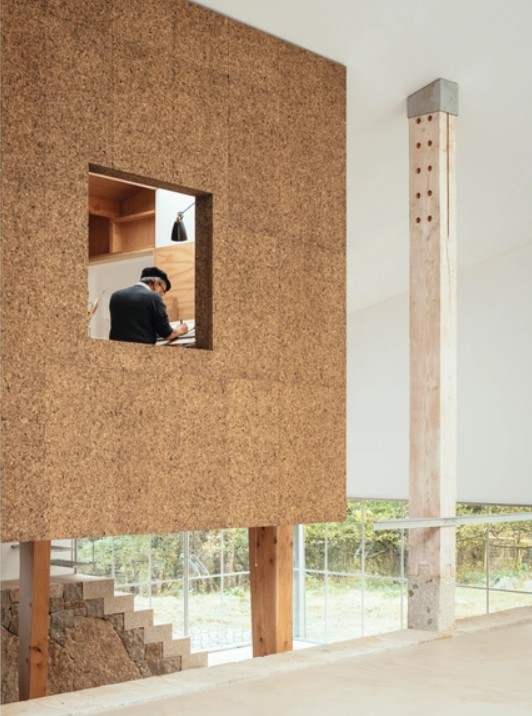
The materials used in interior architecture define not only the appearance of a space but also its atmosphere, comfort and user experience. ArchDaily's article “Applying Exposed Cork in Interior Architecture” explores how cork can be used as a natural and powerful design element indoors.
With its natural texture and warm surface, cork gives interiors a soft, calm and organic atmosphere. For this reason it is used not only as a technical material but also as an aesthetic surface that strengthens the feeling of a space. Using cork visibly on wall coverings, ceiling surfaces, decorative panels and custom design areas adds natural character to a space.
As emphasized in ArchDaily's article, natural materials can bring users closer to reconnecting with nature within the dense, artificial atmosphere of city life. Here cork holds a special place in interior architecture through both its visual and tactile impact.
"Cork is a special design element that provides natural atmosphere, a sense of warmth and material character in interior spaces."
This use shows that cork carries value not only in insulation or industrial production but also in offices, cultural spaces, studios, residences and commercial venues. It offers a strong alternative especially in projects where acoustic comfort, natural surfaces and a warm spatial effect matter.
Using cork in interior architecture makes the material's technical and aesthetic qualities visible at the same time. With its natural structure, lightness and warm texture, cork stands out in modern spaces as a surface solution that is both functional and full of character.